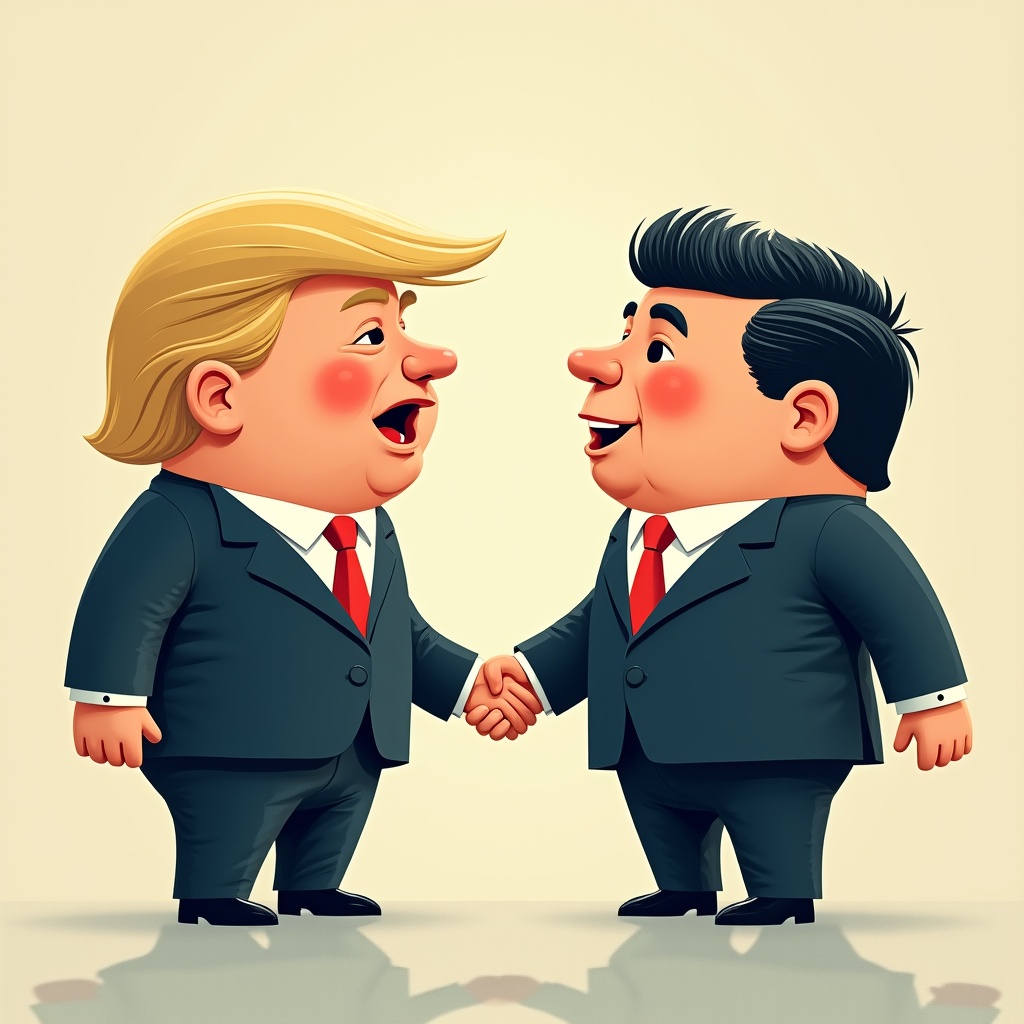
Trump–Xi meeting signals a cautious reset built on ‘constructive strategic stability’
Official readouts from Washington and Beijing used the same phrase — ‘constructive strategic stability’ — after the Trump–Xi meeting, pointing to a guarded effort to manage competition. Here’s what changed, why it matters for markets, and the risks to watch.
The latest meeting between U.S. President Donald Trump and Chinese President Xi Jinping set a restrained but notable tone for the world’s two largest economies. Both governments used the same phrase — constructive strategic stability — in their official readouts, indicating a shared intent to keep tensions from spilling into broader economic disruption. For markets, the alignment on language, rather than new policy deliverables, is the near‑term signal to watch.
Investors are parsing what this means for stocks, bonds, and global risk appetite. With China accounting for roughly 17% of global GDP and U.S.–China goods trade totaling about $575 billion in 2023, even modest shifts in the relationship can influence earnings estimates, sector leadership, and cross‑border capital flows. The meeting did not announce sweeping agreements, but the framing matters for positioning in a market still navigating inflation, interest rate paths, and uneven global growth.
Key takeaways from the meeting
- Shared framing: Both sides emphasized constructive strategic stability, a rare overlap in language that suggests an effort to manage competition and avoid miscalculation.
- Process over pledges: Readouts prioritized ongoing dialogue and working channels rather than headline concessions, pointing to incrementalism.
- Bounded rivalry: The tone signaled that strategic competition will continue, but with attempts to set guardrails around sensitive areas.
What changed vs prior baseline
- Convergent messaging: Agreement on a single stability‑focused phrase contrasts with earlier periods when readouts often diverged sharply, reducing near‑term headline risk.
- Risk‑management emphasis: The focus shifted from broad bargains to practical guardrails and crisis‑avoidance mechanisms, aligning expectations toward steady, smaller steps.
- De‑escalatory tone in public: The absence of new punitive measures in the immediate aftermath lowers the probability of abrupt policy shocks to trade and supply chains.
Why it matters
Markets react not only to policy changes but to the probability of policy shocks. A synchronized signal of stability lowers tail risks that can widen credit spreads, depress cyclical stocks, and pressure global ETFs with large China exposure. For corporate planning, clearer communication channels can support capital expenditure decisions and reduce supply‑chain contingency costs.
Market implications
Equities and sectors
- Exporters and global cyclicals: Companies with meaningful China revenue exposure may see reduced headline volatility, aiding valuation multiples. Industrials, semiconductors, and luxury goods stand to benefit most from a steadier operating backdrop.
- Defensive growth: If stability tempers macro risk premia, investors could rotate selectively from defensives to quality cyclicals, while maintaining attention to earnings durability as inflation and rates evolve.
Credit and rates
- Investment‑grade and high yield: Lower perceived geopolitical tail risk can compress spreads modestly, particularly for issuers reliant on Asia‑Pacific demand or cross‑border supply chains.
- Sovereign and rates: With no immediate policy shifts, core rate expectations remain anchored by domestic inflation and central‑bank paths; geopolitical risk premia may ease at the margin.
ETFs and allocation
- Broad EM and China‑focused ETFs: A stability signal can support flows into diversified emerging‑market funds where China remains a significant weight, while single‑country vehicles may see tactical interest if earnings revisions stabilize.
- Sector ETFs: Semiconductors and global industrial ETFs could benefit from reduced policy shock risk, though export controls and compliance costs remain constraints.
Numbers that frame the debate
- About 17%: China’s share of global GDP underscores why any shift in bilateral tone can ripple through growth expectations and commodity demand.
- $575 billion: The value of U.S.–China goods trade in 2023 illustrates the scale of exposure for corporate revenues, supply chains, and freight pricing.
- Up to 25%: Tariffs on many categories of Chinese imports remain as high as 25%, a reminder that stability in tone does not automatically translate into lower operating costs for import‑reliant firms.
What to watch next
- Follow‑through in working groups: Evidence of sustained technical talks on trade facilitation, macro coordination, or specific industry protocols would reinforce the stability message.
- Corporate guidance: Management commentary during earnings season on China demand, inventory strategies, and capital spending will reveal whether sentiment is improving.
- Regulatory cadence: Any adjustments to export controls, investment screening, or data rules could quickly change the market narrative.
Risks and alternative scenario
- Policy slippage: Absent concrete deliverables, rhetoric could diverge again, reviving volatility across equities and EM FX.
- New restrictions: Additional export controls or sanctions in sensitive technologies could offset any stabilizing effects on supply chains.
- Domestic shocks: Surprises in inflation, growth, or credit conditions in either economy could overshadow diplomatic progress and reprice risk premia.
- Event risk: Maritime incidents, cybersecurity events, or election‑driven policy shifts could challenge the constructive framing.
Investor playbook
- Stay diversified: Maintain balanced exposure across defensives and quality cyclicals, with attention to firms managing tariff and compliance risks.
- Focus on cash flows: Prioritize companies with pricing power and resilient free cash flow to navigate lingering cost pressures from trade frictions.
- Use ETFs tactically: Consider broad EM or sector ETFs to express views on stabilization while avoiding single‑name idiosyncratic risk.
FAQ
What does ‘constructive strategic stability’ mean for markets?
It signals an intent to manage competition and avoid sudden escalations. For investors, that typically reduces tail‑risk premiums and can support multiples in globally exposed sectors.
Were there major policy changes?
No major concessions were announced in the readouts. The value lies in process continuity and communication channels rather than immediate tariff or regulatory changes.
Do tariffs change after the meeting?
Existing U.S. tariffs on many Chinese imports, in some cases up to 25%, remain in place. Companies should plan on continued compliance and cost management.
Which assets are most sensitive?
Global cyclicals (industrials, semiconductors), China‑exposed consumer names, EM equities, and credit for exporters are most sensitive to shifts in tone and policy cadence.
Sources & Verification
-
View sourceCNBC Top Newswww.cnbc.com


