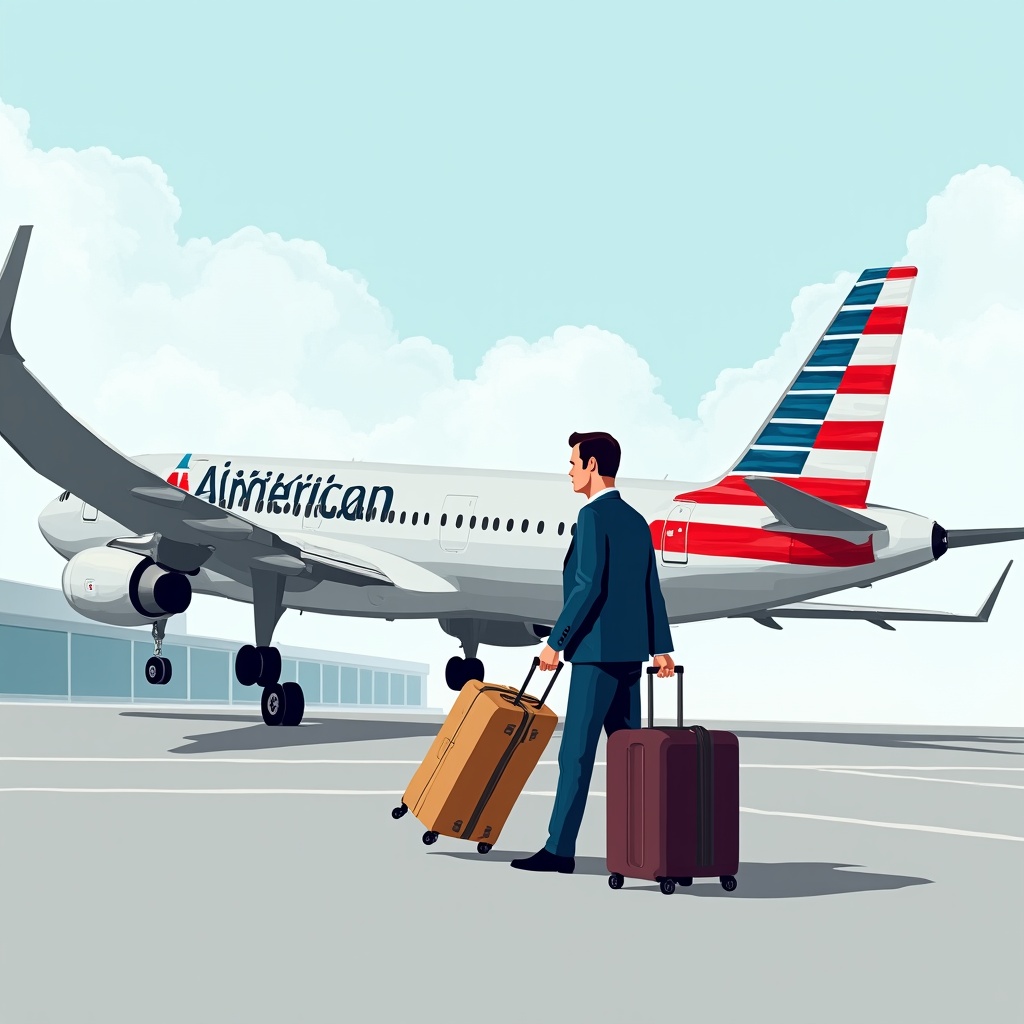
American Airlines lifts checked-bag charges for basic economy as fuel costs rise
American Airlines increased checked-bag fees for basic economy travelers, joining four other major U.S. carriers in adjusting baggage charges amid higher jet fuel costs. The move highlights cost pressures across the airline industry and potential ripple effects for fares, margins, and investor sentiment.
American Airlines raised checked-bag fees for basic economy customers, aligning its policy with recent changes at Delta, United, Southwest and JetBlue as carriers respond to elevated jet fuel prices. The update places American among five major U.S. airlines that have reworked baggage charges in 2026, a shift with implications for travelers’ total trip costs and for airline margins in a competitive domestic market.
The change underscores how fuel remains a key driver of airline pricing decisions. Jet fuel can account for roughly a quarter of an airline’s operating expenses in typical conditions, making ancillary revenue—such as baggage fees—a practical lever when fuel markets tighten. For travelers on basic economy, which already carries more restrictions than standard fares, higher checked-bag costs will raise the all-in price of ultra-low fares at the time of travel.
What changed vs prior baseline
- Broader industry alignment: American joined four peers—Delta, United, Southwest and JetBlue—in updating baggage fee schedules, bringing the total to five large U.S. carriers making changes in 2026.
- Basic economy focus: The most immediate impact falls on basic economy tickets, where checked-bag fees are now higher than before, narrowing the price gap with standard main-cabin options when factoring in luggage.
- Ancillary revenue emphasis: The policy reinforces the industry’s pivot toward fees for services such as checked baggage and seat selection to offset higher input costs, notably fuel.
- Clearer cost signaling: With changes applied across multiple carriers, travelers face more consistent signals that add-on costs may rise when operating costs increase.
Key details travelers should know
- Fare class matters: Basic economy typically offers the lowest base fare but fewer inclusions. Checked-bag fees are now higher on these tickets than before, while main-cabin policies remain unchanged unless specified by the airline.
- Bag count and weight: Standard checked baggage on U.S. carriers generally allows up to 50 pounds (about 23 kilograms) per bag; overweight or additional bags incur separate charges that are typically higher than standard checked-bag fees.
- Route and channel: Fees can vary by domestic versus international routes and by purchase channel (e.g., online prepay vs. airport counter). Prepaying can sometimes lower the per-bag charge.
Why it matters
For travelers, the advertised fare may no longer be the best proxy for total trip cost, especially on basic economy. For airlines, baggage fees provide a relatively resilient revenue stream that can help cushion swings in fuel prices and demand, supporting margins through the cycle.
Market implications
- Equity investors: Higher ancillary revenue per passenger can lift unit revenue and partially offset fuel headwinds, supporting earnings resilience. If sustained across multiple carriers, this may reduce volatility in airline stocks tied to fuel fluctuations.
- Credit investors: Stronger and more diversified cash flows from fees can improve interest coverage in periods of fuel inflation, modestly tightening perceived credit risk for firms with disciplined capacity and cost control.
- ETF holders: Broad aviation or transportation ETFs gain from industry-wide fee normalization. However, dispersion may persist based on each carrier’s exposure to price-sensitive leisure traffic and the mix of fare classes sold.
- Sector allocation: Travel and leisure equities may see near-term support from improved revenue quality, but consumer-sensitive names reliant on discretionary spend could face demand elasticity if total trip costs climb.
Risks and alternative scenario
- Demand elasticity: If higher baggage fees meaningfully raise end-to-end travel costs, price-sensitive travelers may trade down, shorten trips, or shift to carriers and routes with lower add-on fees.
- Fuel volatility reversal: A decline in jet fuel prices could reduce the urgency for elevated fees, prompting competitive rollbacks or promotions that pressure ancillary yields.
- Regulatory scrutiny: Policymakers could examine transparency and fairness of add-on fees, increasing compliance costs or limiting how and when fees are applied.
- Competitive responses: Low-cost carriers or loyalty-linked promotions could undercut baggage fees selectively, forcing targeted discounts and eroding expected revenue gains.
What travelers can do now
- Compare total trip cost: Include expected bag fees for 1st and 2nd checked bags when comparing basic economy to main cabin—paying a slightly higher fare can be cheaper if it includes luggage.
- Prepay and pack light: Prepaying for bags online can be cheaper than airport payment; keeping bags at or below 50 pounds (23 kg) helps avoid overweight charges.
- Leverage loyalty and cards: Elite status and certain co-branded cards can waive or reduce checked-bag fees for the traveler and companions on the same reservation.
FAQ
Which tickets are most affected?
Basic economy fares are most directly affected, as checked-bag fees on these tickets have increased. Main-cabin policies are unchanged unless specified by the airline.
Does this apply to all routes?
Baggage fees can differ by route and region. Domestic and international itineraries may have distinct rules and price points, and airlines can vary fees by purchase channel.
Can I avoid the higher fees?
Travelers can consider main-cabin fares that include bags on some routes, prepay online when available, maintain elite status, or use eligible co-branded credit cards to reduce or waive fees.
Why are multiple airlines changing fees now?
Elevated jet fuel prices and broader cost pressures have led carriers to lean more on ancillary revenue. In 2026, five major U.S. airlines adjusted baggage fees, reflecting industry-wide cost dynamics.
Will this affect airline earnings?
Ancillary revenue can cushion fuel-driven margin pressure, potentially supporting earnings. The net effect depends on demand elasticity and competitive responses.
Sources & Verification
-
View sourceCNBC Top Newswww.cnbc.com


