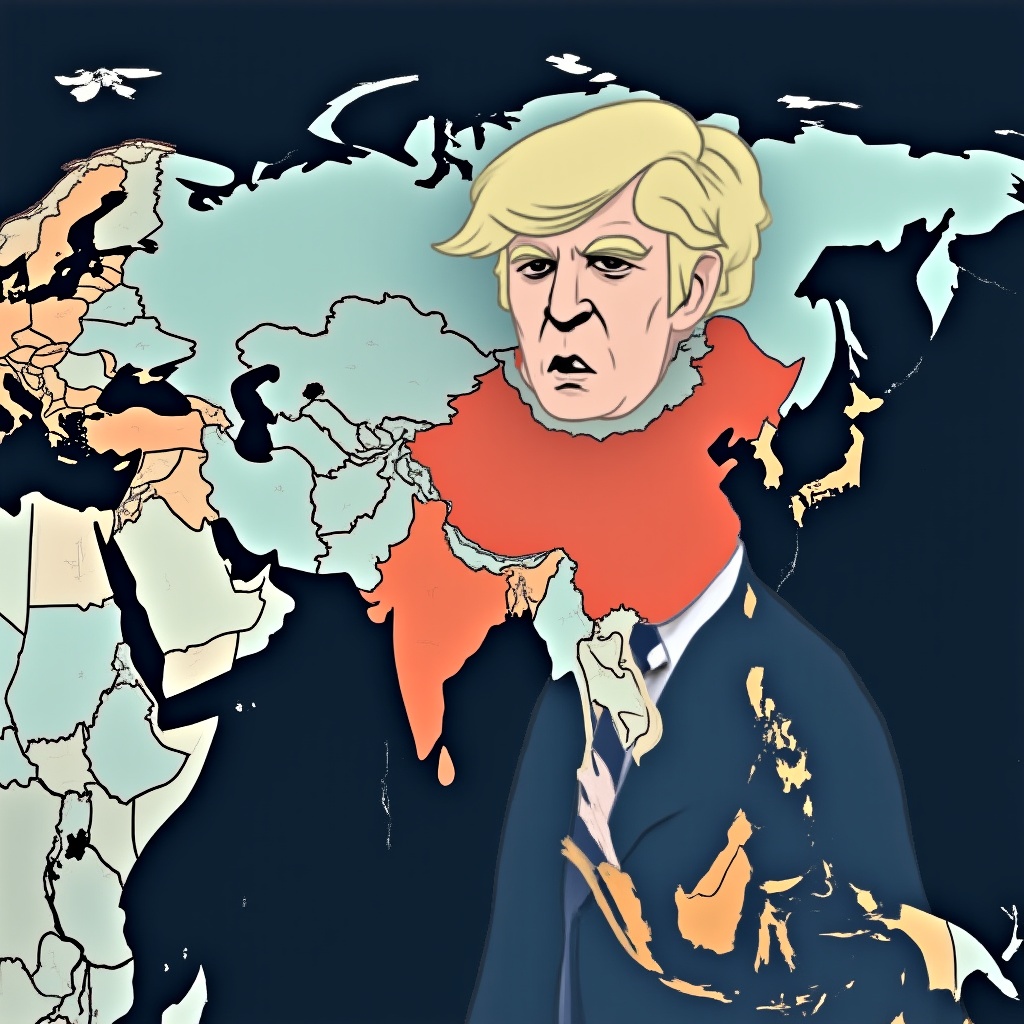
Asia-Pacific stocks advance as markets weigh Trump’s Iran comments and geopolitical risk
Regional equities rose while investors parsed former U.S. President Donald Trump’s mixed messages on Iran—warning of strikes within 24 hours absent a deal, yet suggesting talks are active. Markets balanced geopolitical risk with inflation and rate considerations.
Asia-Pacific stocks advanced as investors assessed former U.S. President Donald Trump’s latest remarks on Iran, which combined a renewed threat of force with signals of ongoing negotiations. The markets move reflects a cautious risk-on tone, with participants weighing geopolitical headlines against core drivers such as inflation, interest rate expectations, and earnings outlooks across the region’s major markets.
The policy overhang centers on Trump’s statement that Iran faces potential military action unless a peace arrangement is reached within 24 hours, even as he indicated Iranian leaders are engaging in talks. That compressed timeline matters because it can rapidly change market assumptions on energy supply, inflation pressures, and the interest rate path—key variables for equities, credit, and ETF investors.
What changed vs prior baseline
- Shift from ambiguity to a time-bound warning: The introduction of a 24-hour window concentrates event risk, prompting portfolio hedging and shorter decision cycles for traders.
- Mixed signaling: Markets must balance two simultaneous messages—threat of escalation and signs of negotiation—raising near-term volatility without a clear directional policy path.
- Regional resilience: Despite the rhetoric, Asia-Pacific benchmarks opened higher, suggesting investors see a lower immediate probability of broad conflict or are focusing on domestic earnings and economic data.
- Repricing of oil risk premia: Energy-sensitive sectors began to reflect a modest geopolitical premium, with attention on shipping lanes and potential supply disruptions.
Why it matters
Geopolitical flashpoints can feed through to inflation, policy rates, and corporate margins. Around 20% of global seaborne oil shipments move through the Strait of Hormuz; any credible threat to that corridor can push input costs higher for transport, manufacturing, and utilities. Because many central banks target inflation near 2%, an oil shock could delay rate cuts or prompt a tighter stance, directly affecting valuation multiples and financing costs.
Market implications
Equities
- Energy and defense: Oil producers and services may benefit from higher risk premia, while defense names could see interest from investors seeking geopolitical hedges.
- Transport and consumer: Airlines, logistics, and discretionary retailers are vulnerable if fuel costs rise and real incomes soften.
- Earnings visibility: Management guidance becomes more valuable; firms with pricing power and low energy intensity are positioned to defend margins.
Credit and rates
- Credit spreads: High yield issuers in energy-intensive sectors could face wider spreads on margin risk; investment-grade with strong cash flow may remain resilient.
- Rates sensitivity: If oil lifts headline inflation, sovereign curves could bear-steepen as term premia rise, pressuring duration-heavy portfolios.
ETFs and allocation
- Broad-market ETFs: Beta exposure may continue to work if conflict is contained, but drawdown risk rises around event headlines.
- Leveraged ETFs: Products targeting 2x–3x daily returns can magnify intraday swings during headline risk; sizing and stop-loss discipline are critical.
- Sector rotation: Overweights to energy and quality defensives can offset cyclical exposure in transport and discretionary until visibility improves.
Key numbers to watch
- 24 hours: The stated window for securing a peace understanding concentrates headline risk and can trigger short-dated hedging in options and futures.
- ~20% of global oil shipments: The share passing through the Strait of Hormuz underscores why energy prices are highly sensitive to Iran-related developments.
- 2% inflation targets: With many central banks aiming for about 2% inflation, any oil-driven spike could complicate timing of rate cuts and equity valuation support.
Risks and alternative scenario
- Escalation risk: Any strike on critical infrastructure or shipping could disrupt supply chains, lift oil prices, and pressure global risk assets.
- Negotiation stall: If talks fail without overt conflict, a protracted standoff may sustain a geopolitical premium in commodities and keep volatility elevated.
- Policy surprise: Rapid shifts in U.S. or regional policy responses could move markets faster than fundamentals, challenging risk models.
- Inflation flare-up: A commodity-led rebound in headline inflation may delay rate cuts, tightening financial conditions and weighing on growth-sensitive stocks.
- Liquidity gaps: Sudden headline bursts can widen bid-ask spreads, affecting execution for cash equities, credit, and ETFs.
What investors are watching
- Energy markets: Price action in crude and refined products as a barometer of perceived supply risk.
- Rate expectations: Changes in policy-rate futures and bond yields for signals on inflation pass-through.
- Corporate guidance: Updates from transport, industrials, and consumer sectors on fuel costs and demand elasticity.
Regional context
Asia-Pacific markets often react first to geopolitical headlines hitting overnight in the West, setting the tone for global risk appetite. In this session, the region’s gains indicate investors are differentiating between headline risk and base-case fundamentals such as domestic earnings, currency stability, and fiscal support. For now, the absence of immediate kinetic escalation has allowed equities to lean on underlying economic data while maintaining hedges.
FAQ
What did Trump say and why is it market-moving?
He warned of potential action against Iran within 24 hours if a peace arrangement is not reached, while also signaling that negotiations are underway. The combination of a short deadline and mixed tone injects uncertainty into oil supply and inflation expectations.
Which parts of the market are most sensitive?
Energy, airlines, logistics, and consumer discretionary are most exposed to fuel-cost swings. Defense and certain commodities can act as partial hedges in risk-off episodes.
How could this affect inflation and interest rates?
A sustained oil premium could lift headline inflation, complicating the path toward the roughly 2% targets many central banks use. That may delay or reduce the scope of rate cuts, affecting valuations and borrowing costs.
What are prudent portfolio steps now?
Consider diversified exposure, maintain liquidity for dislocations, evaluate selective hedges in energy or volatility, and right-size any 2x–3x leveraged ETF positions due to amplified risk.
What would reduce market stress?
A clear de-escalation or confirmation of productive talks would likely compress risk premia in energy and support cyclical equities, especially in transport and consumer sectors.
Sources & Verification
-
View sourceCNBC Top Newswww.cnbc.com


